Pétanque is when steel balls sing on gravel, and a small wooden “piglet” sets the pace for the whole game. This sport from the boules family, which originated in Provence, has long since gone beyond the confines of cozy squares and is now firmly established in the global calendar. The game is non-contact, but it is 100% emotional: one throw can turn the tide, and one successful tactic can tip the game in your favor.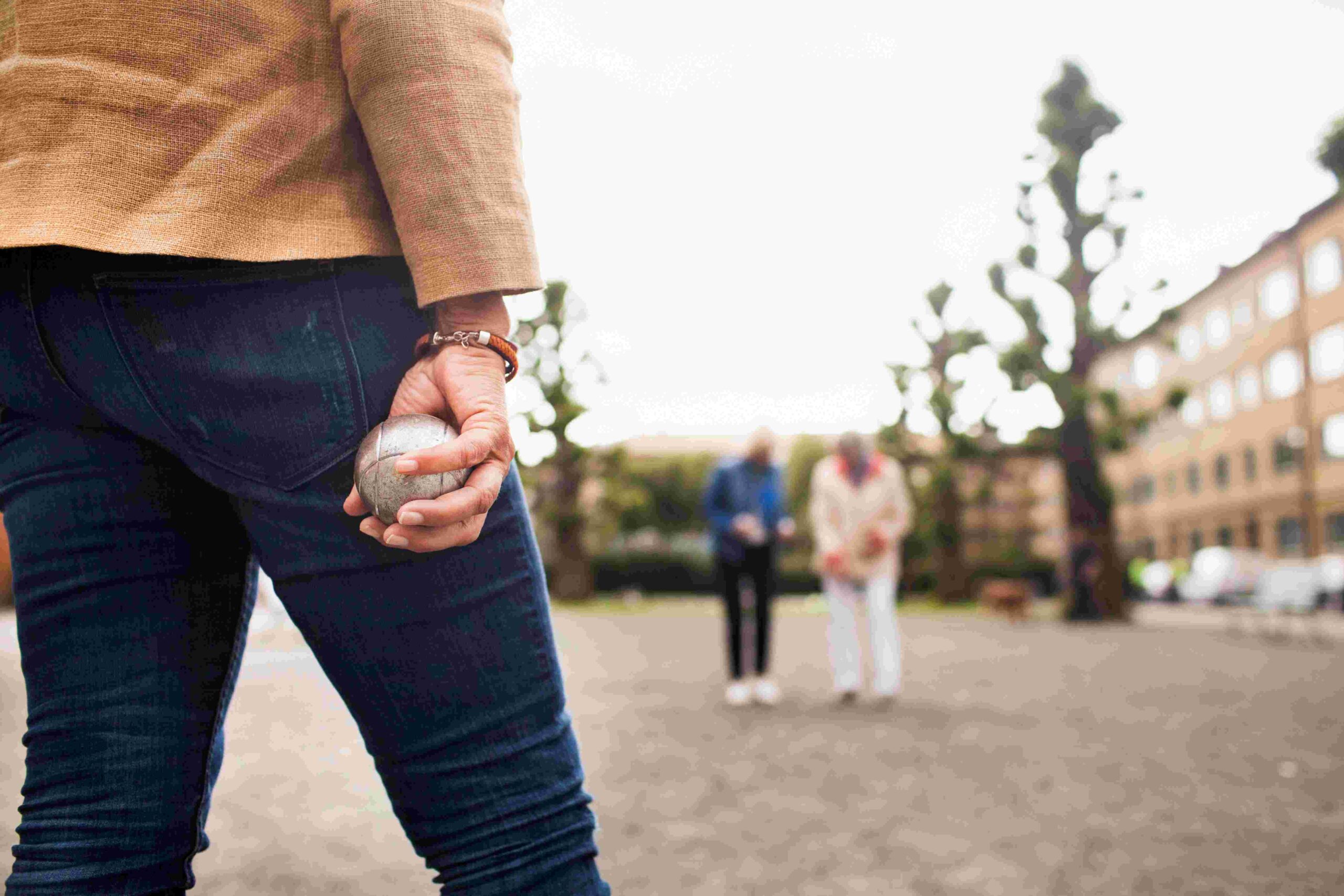
Where and how to play
The modern rules were established in the early 20th century in La Ciotat, on the Mediterranean coast of France. The name comes from the expression “pè tancat” (“foot fixed”): the throw is made from a circle, with both feet on the ground. The equipment is simple: metal boules and a small target ball, known as a choson. The best surface is compacted soil or gravel; on such courts, called boulodromes, the balls and the terrain engage in a fair dialogue.
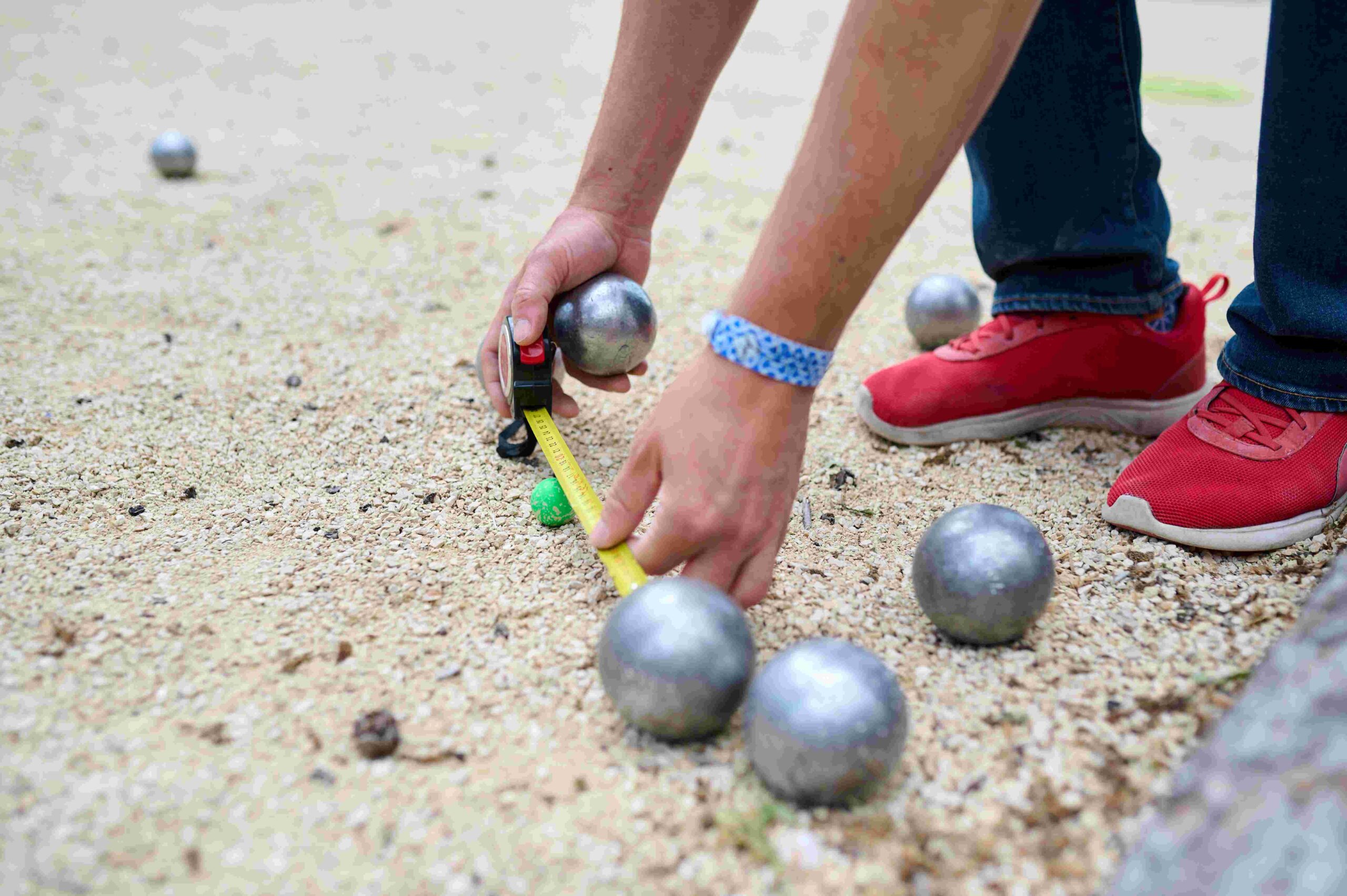
The goal is that by the end of the “mene” (round), your boules should be closer to the chouchon than any of your opponents’. Each such ball is worth one point. Individuals, pairs, and trios play the game. In singles and pairs, each player has three boules, and in trios, each player has two. The team that reaches 13 points first wins.
Placing and knocking out
There are two fundamental skills in Pétanque. “Pointing” is when you place your boule as close as possible to the target, taking into account the terrain, rebounds, and micro-slopes. ‘Shooting’ is when you aim at an opponent’s boule to move it and free up space for your own. The ideal shot is a “carreau”: the opponent’s ball flies away, and yours remains almost in the same spot. Spectators love the game for moments like these, and players rehearse for hours.
There is also a golden formula: boule devant, boule d’argent, “the ball in front is worth money.” A boule lying in front of the jack along the line of the throw simultaneously covers the target and gives you a chance to push it even closer if you hit it.
Before throwing, the player reads the field like a wind map. Is a high arc needed to fly over a bump and land with almost no roll? Or a soft “plassage” so that the ball immediately “sticks” to the ground? Sometimes the task is to provoke your opponent: to place a “too good” ball and force them to shoot at an inconvenient moment, wasting their ammunition ahead of time. A common rule is that it is better not to shoot the team’s last boule, but to “save the point” with a careful placement.
The strategy begins with the koshon throw. A comfortable distance for your shooter, uncomfortable for the opponent. An uneven segment where your pointers are strong, and your opponents are lost. And no templates: change the length and direction so that your opponents cannot “read” your game.
Vocabulary you might hear on the court
The circle is the place to shoot. “Having a point” means that your ball is closest, and then it’s your opponent’s turn. “Bombard” is a series of shots when you knock out one successful ball after another. A “carambole” is a shot that takes out several boules at once. A ‘fusee’ is a ball that has strayed from its trajectory. A “fanny” is a rare and resounding 0:13 loss; traditionally, the losing team buys drinks for the winners, and in some places, they also take a photo with a mischievous picture of Fanny.

Who rules the world of Pétanque?
The international family is led by the FIPJP Fédération Internationale de Pétanque et Jeu Provençal. Pétanque is not yet part of the Olympic program, but it has been a regular feature of the World Games since 1985. Its geography is expanding, and this is evident not only in France and Spain, but also in Oceania.
Pétanque New Zealand has a busy calendar, hosting nine national championships
How it works in New Zealand
each year. In the fall, there are singles and doubles. In the winter, there are veteran doubles for players 60 and above. In February, there are women’s triples and a separate “shooting” competition for women. In March, there are men’s “shooting” and large triples, plus accuracy competitions. Mixed doubles were added to the program in 2017 and quickly became a fan favorite. The club championship concludes the season in the spring. Any active member of a club affiliated with the national federation is eligible to participate in singles, doubles, mixed doubles, and triples. Participants over 60 are allowed in veteran pairs; only female players are allowed in women’s trios. In the club format, a team of six must include at least two women.
Pétanque is waiting for newcomers!
Pétanque is beautiful in that it combines craftsmanship and character. Here, your hand, eye, and nerves are essential. But even more important are the people around the circle. This is especially noticeable at tournaments: you hear the metallic “ding,” see the team discussing every millimeter, and understand why the game was born in the shade of plane trees and now lives on city embankments, in courtyards, and on boules courts around the world.
If you want more, grab a boules, draw a circle, and get started. And if you already play, add a new technique to your arsenal, practice your “carre” and see how the game changes when the ball lands on the palm of the court exactly as you intended. This is Pétanque: precision, planning, and the joy that can be heard in every throw.